

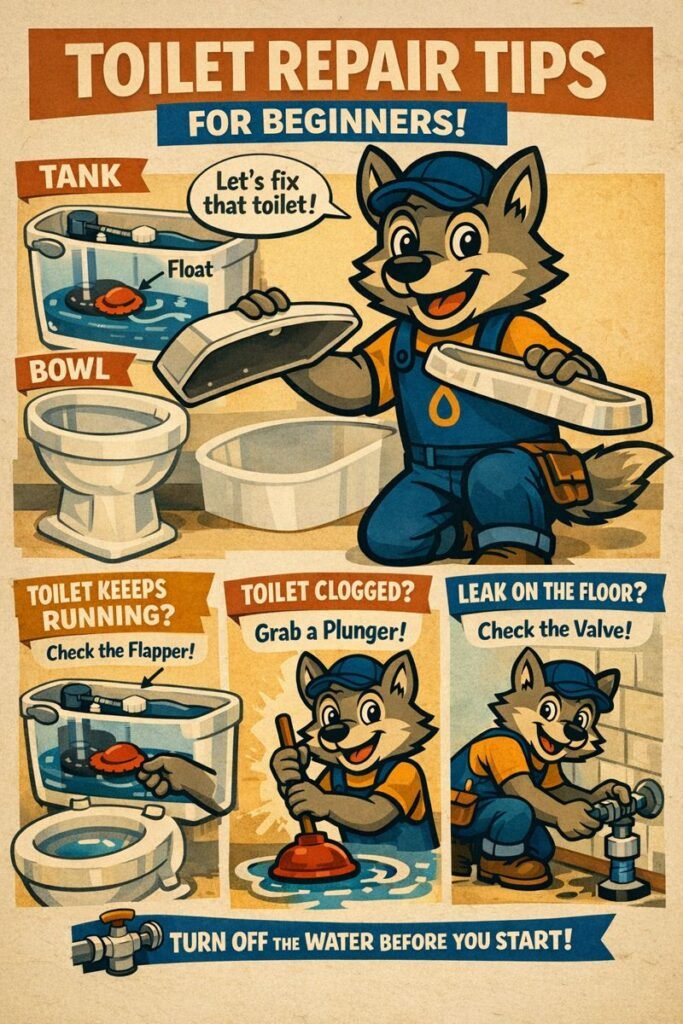
A toilet that runs nonstop, won’t flush right, or leaks can feel like a big problem—but most toilet repairs are simple, cheap, and totally doable with basic tools. This guide is written for people who don’t know plumbing, and it’ll walk you through the most common toilet issues step by step.
Before You Start: Two Things to Know
1) The toilet has two main parts
- Tank (top part): Holds water and controls filling/flushing.
- Bowl (bottom part): Where the flush happens.
2) There are two shutoff points
- Toilet shutoff valve: Usually behind the toilet, near the floor.
- Tank lid: Pop it off carefully and set it somewhere safe.
Pro tip: If you ever feel unsure, just turn off the water first. It prevents most “oops” moments.
Basic Tools (Nothing Fancy)
You don’t need a plumber’s toolbox. Usually this is enough:
- Adjustable wrench or pliers
- Flathead screwdriver
- Small towel or sponge
- Rubber gloves
- A small bucket (optional but helpful)
Problem #1: Toilet Keeps Running (Most Common)
What it looks like
You hear water refilling randomly, or the toilet “hisses” and never fully stops.
Why it happens
Usually one of these:
- The flapper (rubber flap at the bottom of the tank) isn’t sealing.
- The chain is too tight or too loose.
- The water level is too high and spills into the overflow tube.
How to fix it (10-minute fix)
- Remove the tank lid.
- Look at the flapper (rubber piece at the bottom).
- Press it down gently.
- If the running stops → the flapper is likely worn or dirty.
- Check the chain:
- It should have a little slack (not tight like a guitar string).
- Check the water level:
- Water should sit about 1 inch below the top of the overflow tube.
- If the flapper looks warped, stiff, or cracked → replace it (cheap and easy).
Beginner win: Replacing a flapper is one of the easiest repairs and solves a huge percentage of running toilets.
Problem #2: Toilet Won’t Fill (No Water in Tank)
What it looks like
You flush and… nothing refills.
Quick checks
- Make sure the shutoff valve is fully open (turn counterclockwise).
- Lift the tank lid and see if the float is stuck.
Fix
- If the float is jammed, gently move it down and up.
- If the valve is old and not filling even when the float moves, you may need a fill valve replacement (still beginner-friendly).
Problem #3: Weak Flush or Toilet Clogs Easily
What it looks like
The bowl doesn’t clear well or needs multiple flushes.
Causes
- Low tank water level
- Clogged rim jets (mineral buildup)
- Partial clog in the drain
Fixes
- Check tank water level (same as above—about 1 inch below overflow tube).
- Try a plunger the right way:
- Use a flange plunger (the one with the extra rubber flap).
- Push down slowly first to seal, then plunge firmly 10–15 times.
- If mineral buildup is bad:
- You can clean rim holes carefully, but if you’re not comfortable, skip this step and focus on the basics.
Problem #4: Water Leaking Onto the Floor
What it looks like
Puddles around the toilet base.
Important: Find the leak source first
- Dry everything with a towel.
- Flush once and watch where water appears.
Common sources
- Supply line connection (where the water line meets the tank)
- Tighten gently with a wrench (don’t overdo it).
- Tank bolts (under the tank)
- Water drips from the tank area → could be bolt gaskets.
- Base leak (wax ring)
- Water comes from under the toilet base → wax ring may be failing.
Beginner note: Wax ring replacement is doable, but it involves lifting the toilet. If you want a beginner-safe plan for that, I can write a separate guide.
What You Should Not Do (Common Beginner Mistakes)
- Don’t use drain chemicals repeatedly—they can damage pipes and make future repairs harder.
- Don’t overtighten plastic parts in the tank—they crack easily.
- Don’t ignore small leaks—they quietly raise your water bill and can damage flooring.
Quick “Should I Call a Plumber?” Checklist
Call a pro if:
- Water is coming from the ceiling below (multi-story home)
- The toilet rocks or the floor feels soft
- You suspect a broken flange or serious drain issue
- You replaced parts and it still leaks/runs
Final Tip: Most Toilet Repairs Are Cheap
A flapper, fill valve, or supply line is usually inexpensive, and learning to fix these once saves you money forever.
If you want, tell me what symptom your readers complain about most (running, clogging, leaking, weak flush), and I’ll tailor a version of this post that’s more focused—and I can also write a short “tool list + parts list” section for your blog with simple product descriptions (no jargon).